Urgent Alert: Understanding and Preventing Parvovirus in Our Community (Phoenix, Arizona)
Updated: Dec 17, 2025
By: Karalyn McGee, Office Manager
December 11, 2025
We are reaching out today with an urgent public health message: recently, our practice and the broader local veterinary community, has seen an alarming increase in cases of Canine Parvovirus (CPV) in Arizona.
This is a critical time for awareness and proactive prevention. As a mobile, in-home veterinary service, McGee Veterinary Service of Phoenix, AZ is dedicated to keeping your pets safe and wants to ensure every family knows the facts about parvo.
What is Canine Parvovirus (CPV)?
Canine parvovirus is a highly contagious viral illness that primarily affects dogs, especially unvaccinated puppies and adolescent dogs as well as adult and geriatric dogs that are not current on their parvo vaccine. The virus attacks rapidly dividing cells, most severely those in the lymph nodes, bone marrow, and the lining of the small intestine.
The Science Behind the Threat
Parvovirus is extremely resilient and can survive in the environment (e.g., soil, contaminated surfaces) for months, even up to a year or longer, making it incredibly difficult to eliminate and easy to spread.

Transmission: A dog becomes infected by ingesting the parvovirus, usually through contact with contaminated feces, but also through contaminated surfaces, shoes, clothing, or even a person's hands.
The Gut Attack: Once ingested, parvovirus attacks the intestinal lining, causing severe bloody diarrhea, vomiting, and an inability to absorb nutrients.
The Immune Attack: Parvovirus also targets bone marrow, decreasing the white blood cell count, which weakens the immune system's ability to fight off the parvovirus infection and secondary bacterial infections.
Recognizing the Signs of Parvovirus
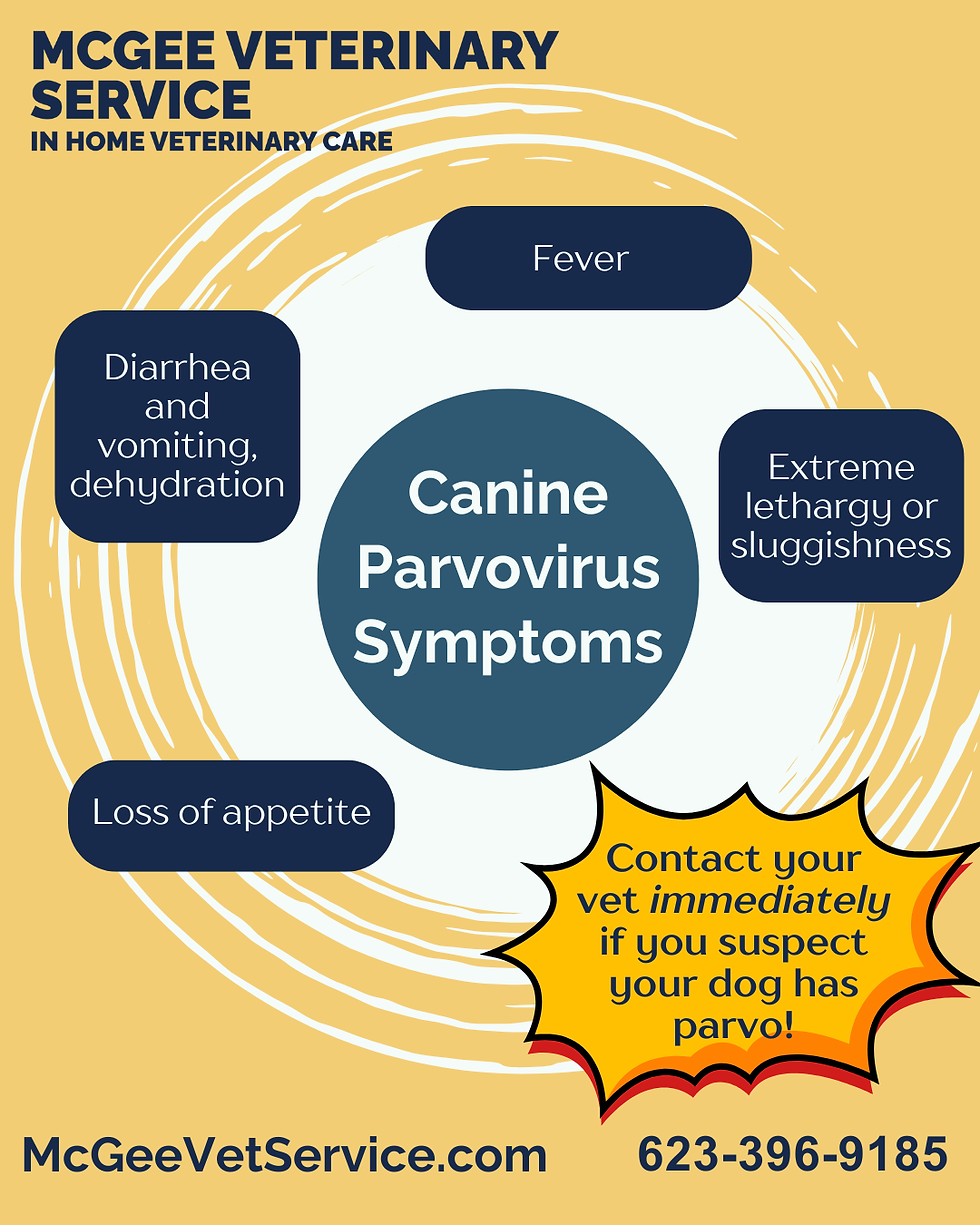
Parvo symptoms typically appear 5-10 days after exposure. If your dog exhibits any of these signs, contact your veterinarian or an emergency veterinary hospital immediately:
Gastrointestinal: severe, often bloody, diarrhea (may have a foul odor) and/or persistent vomiting. HIGH urgency level – rapid dehydration can be fatal.
Systemic: Extreme lethargy/sluggishness, loss of appetite, fever or low body temperature. HIGH urgency level – indicates systemic failure.
Appearance: Weight loss, obvious signs of distress, and abdominal pain.
IMPORTANT NOTE: Puppies can deteriorate incredibly fast. If you suspect parvo in a puppy or adult dog, do not wait to see if they improve. Call your veterinarian or an emergency veterinary hospital immediately.
Treatment of Parvo in Dogs
Successfully treating parvovirus requires intensive, round-the-clock supportive care, usually
in a veterinary hospital setting. There is no drug that directly kills the virus, so the goal of treatment is to support the patient's body systems until their immune system can naturally fight off the infection.
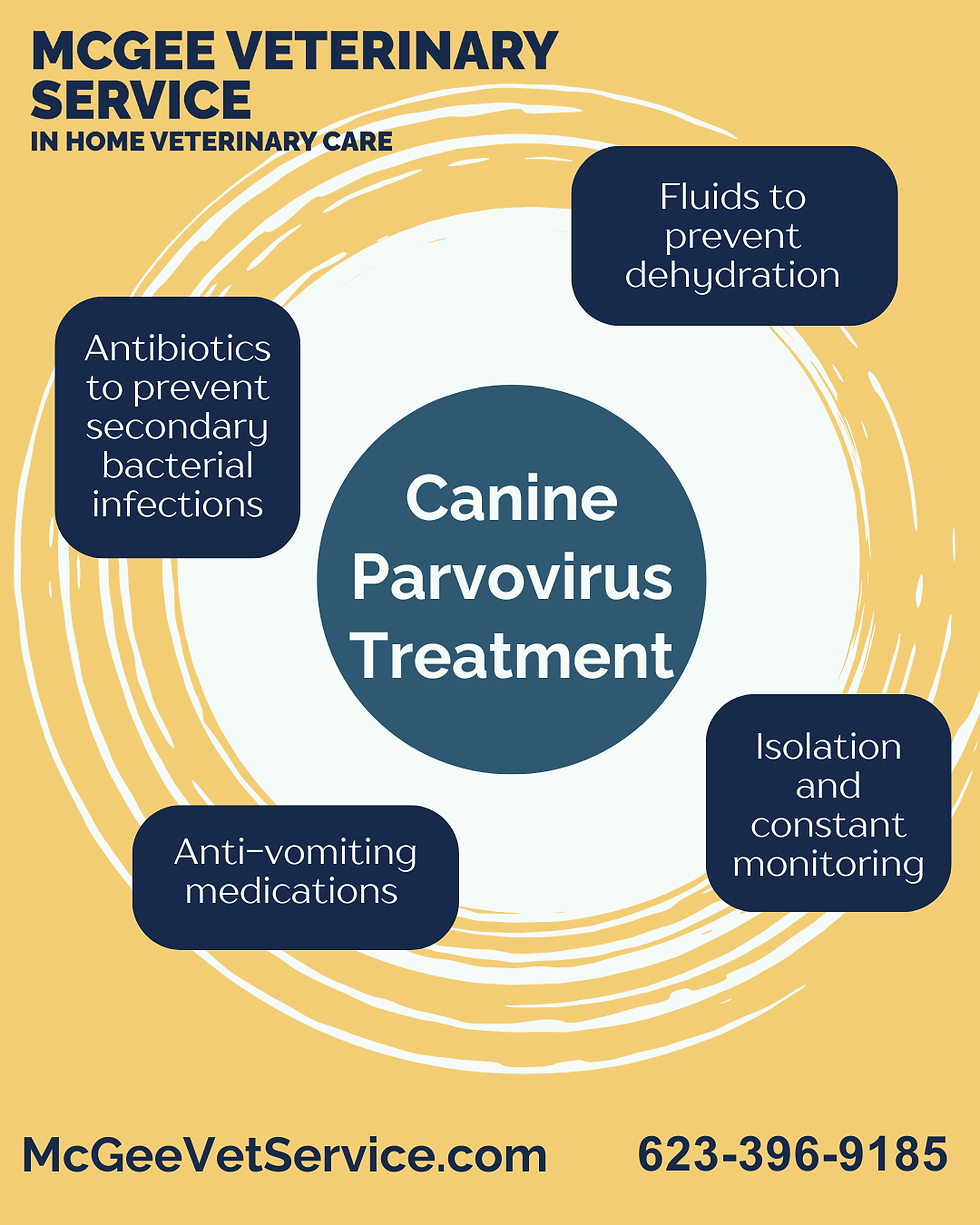
IV fluids to prevent dehydration
Antiemetics (anti-vomiting medications) and antacids for comfort: Persistent vomiting prevents the dog from keeping down any food or water, accelerating dehydration. The constant irritation from the virus and vomiting can also lead to painful stomach ulcers.
Antibiotics to prevent secondary infections: Parvovirus itself is a virus and cannot be treated with antibiotics, but a parvo infection does make the immune system more susceptible to picking up a secondary bacterial infection.
Isolation and constant monitoring: Because parvovirus is so contagious, infected dogs must be kept in strict isolation to prevent spreading the infection to other dogs. Constant monitoring is necessary because a parvo patient's condition can change drastically within hours.
With aggressive, supportive care, the survival rate for dogs treated for parvovirus can be high. However, treatment is costly, often running into thousands of dollars due to the necessary 24-hour critical care and hospitalization. Prevention through vaccination remains the safest and most cost-effective approach.
Parvovirus Prevention: Vaccination
**Vaccination is the single most effective way to protect your dog.**
Vaccination not only helps to prevent your dog from getting parvo, it also decreases the amount of disease in the community - fewer dogs getting exposed to the virus means that fewer dogs will get infected with parvovirus.
Puppy Protocols: Puppies require a series of vaccinations, usually starting around 6-8 weeks of age and repeating every 3-4 weeks until they are 16-20 weeks old. Until a puppy has completed this full series, they are NOT fully protected - keep them isolated until two weeks after the final vaccination.
Adult Dogs: All adult dogs require regular booster shots, typically every three years (after the initial series). Check your pet's records or contact your veterinarian to verify their current status.
Parvovirus Prevention: Sanitation and Safety
Limit High-Risk Exposure:
Puppies: Until your puppy is fully vaccinated (after the 16-week booster), DO NOT let them walk in public spaces (parks, sidewalks, pet stores, dog parks) where sick dogs may have defecated. Use puppy pads or your own backyard.
Adult Dogs: Ensure your dog is up-to-date on vaccines before exposing them to other dogs, or areas where other dogs defecate.
Dog Parks/Daycare/Groomers: If there are reported cases of parvovirus in your area, consider pausing attendance at communal dog facilities temporarily. Confirm with your doggy daycare provider or groomer that they require the parvovirus vaccine for all dogs.
Practice Biosecurity:
Shoe/Hand Control: Remove your shoes immediately upon entering your house. Never walk in your yard or house wearing shoes you wore to an area with dog traffic. Wash your hands thoroughly after petting dogs outside of your home.
Disinfection: Only a 1:30 solution of bleach and water is generally effective against Parvovirus. Standard cleaners, like Lysol or Pine-Sol, are insufficient. Please see the following resources for more information:
If You Suspect Parvo...
Isolate your pet immediately from any other dogs in the house. Call your veterinarian (or an emergency clinic after hours) right away. Do not let your dog defecate in areas accessible to other pets.
How McGee Veterinary Service Can Help Prevent Parvovirus in Arizona
Your vigilance is the best defense against a parvovirus outbreak. The team at McGee Veterinary Service is here to support you with testing, vaccination schedules, and any concerns you may have.
Let's work together to keep Phoenix happy and healthy! Is your pet due for their parvovirus vaccine booster? During your next at-home vet visit, we can administer the DHPP (distemper/parvo) vaccine. Schedule your mobile vet visit with McGee Veterinary Service at 623-396-9185 today!

McGee Veterinary Service offers in-home veterinary care and peaceful at-home euthanasia to Phoenix, Scottsdale, Paradise Valley, Cave Creek, Carefree, New River, Anthem, Peoria, Glendale, Litchfield Park, Surprise, Sun City, and Sun City West. To see if we cover your neighborhood, view our detailed Service Area Map.
ABOUT THE AUTHOR
Karalyn McGee is the Office Manager at McGee Veterinary Service. With a bachelor’s degree in biology, she brings a strong scientific foundation to the administrative side of the clinic. When she isn't wrangling the clinic's logistics, Karalyn is usually found with her nose in a good book, enjoying camping trips, or chasing after a toddler.